


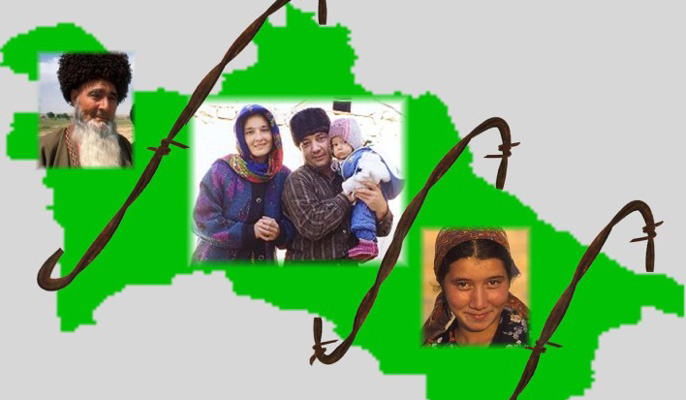


Overview of the human rights and democracy situation: In 2025, the overall human rights situation in Turkmenistan remained difficult, with a score of 1/100 (not free) in Freedom House’s Freedom in the World index. As regards individual rights, restrictions persisted on the freedom of movement (internal and external), together with violations of freedom of expression and media, as well as association and assembly. Concerns remained regarding restrictions to freedom of religion or belief; the situation of the LGBTI community (i.a. consensual sex between men remained criminalised; cases of violence based on sexual orientation of the victims were reported); and cases of torture and illtreatment in prisons. Some improvements were noted in places of detention, in addressing gender equality and gender-based violence, and in cooperation with the ILO on eradicating forced labour. Becoming the second country globally (after Kyrgyzstan) to eliminate all known cases of statelessness, Turkmenistan reportedly continued the practice of refusing to issue passports to Turkmen citizens abroad, which implied the risk of statelessness. Turkmenistan continued to implement the second National Action Plan on Gender Equality 2021-2025, and in September 2025, Turkmenistan’s Interdepartmental Commission on Human Rights and International Humanitarian Law held consultative meetings with UNFPA and national partners to draft a new National Action Plan on Gender Equality for 2026–2030. During 2025, Turkmenistan, with the support from UNDP and OHCHR, developed a new National Action Plan on Human Rights (NHRAP) for 2026-2030, declaring that it has been aligned with recommendations from its Universal Periodic Review (UPR) and other consultation processes. However, no implementation plan for the UPR has been developed. In January 2025, the President approved the National Action Plan to Combat Human Trafficking for 2025-2029.
EU action - key focus areas: The EU continued promoting a global system for human rights and democracy support. The EU and its Member States continued supporting capacity building of Turkmen authorities to implement international human rights conventions and domestic legislation. A number of workshops, seminars, trainings and events were organised through regional and bilateral programmes, within the existing framework which necessitates government approval for all actions. The areas included child rights; judicial and penitentiary systems; environmental and participationrelated rights; media literacy; and the ethical use of artificial intelligence. The EU continued its actions in supporting civil society and human rights defenders, including journalists. Diplomatic action was taken in a number of individual cases.
The EU-funded Civil Society Facility in Central Asia is advancing human rights implementation in the region through structured mechanisms like the Youth Sounding Board (YSB) (established in Turkmenistan in mid-2025) and Thematic Working Groups (TWGs), which prioritize inclusive dialogue 65 and evidence-based advocacy. The YSB ensures youth representation in policy processes, with a majority of members in Turkmenistan being female, and focuses on issues such as governance, climate justice, and gender equality. The local YSB actively cooperated with the EU Delegation in 2025.
Gender equality and women’s rights were at the core of the EU action in Turkmenistan. Targeted actions were held on the occasion of global campaigns (dedicated to International Women’s Day; Breast Cancer Awareness Month; the International Day of the Girl Child; 16 Days against Gender-Based Violence Campaign; Human Rights Day).
EU bilateral political engagement:
The EU voiced its concerns about individual cases through accessible diplomatic means, including Notes Verbales and démarches. Human rights were raised during, in preparation for and following bilateral engagements, including in the framework of the annual Joint Committee meeting and the human rights dialogue. Human rights concerns were also raised by the European Parliament and the EU Special Representative for Central Asia, as well as by Commissioner Síkela and HRVP Kallas, during their meetings at the highest levels, held in Ashgabat in 2025. EU financial engagement: The protection and promotion of human rights, with particular emphasis on the rights of women, children, and persons with disabilities, has been mainstreamed across all projects that the EU implements in Turkmenistan, both at bilateral and regional level. As an example, the CSO project implemented with the Union of Economists conducted an analysis of gender legislation in Turkmenistan and developed recommendations to improve legislation that is planned to be submitted to the government. The recommendations, based on analysis and the results of a survey of women entrepreneurs (328 respondents), propose clarifying gender equality provisions in legislation and introducing targeted measures in key laws on employment, education, entrepreneurship, taxation, and state governance. They also emphasise the need to provide women with greater access to training, advisory support, and incentives, and to improve coordination among state institutions, with particular attention to women in the regions.
Multilateral context:
Turkmenistan maintained a low level of engagement with multilateral human rights institutions. Turkmenistan has never been a member of the UN Human Rights Council (HRC) and is not active as an observer. Turkmenistan participated in the OSCE/ODIHR Human Dimension Implementation Meeting (HDIM) in October 2025. The UN OHCHR plan of deployment of an expatriate human rights officer to Turkmenistan would be a commendable development, in case a funding solution is found. The démarches on human rights included topics in relation to the HRC, the UNGA Third Committee. The EU continued encouraging Turkmenistan to seek the advice of specialised international bodies, and to involve civil society in the process of reforms in a meaningful way.


